Implementation case study
KOI Software Studio
Keep project files, compiler feedback, repair orchestration and resumable state in one local engineering workspace.

Components and control flow
- Workspace selection and project files
- Plan and dependency-ordered work; targeted file patches
- Real build toolchain and structured compiler diagnostics
- Checkpointed plan, stage, files and failed nodes
- Local preview and inspectable output
Decision: use compiler feedback, preserve the plan
The compiler loop consumes actual toolchain errors rather than relying only on model review. Its default iteration budget is one unless a remediation callback is supplied. Checkpoints retain the execution plan and failed-node state so a resumed run can reuse prior planning. This adds persistence and recovery complexity; compilation still cannot establish useful application behavior.
Bounded walkthrough
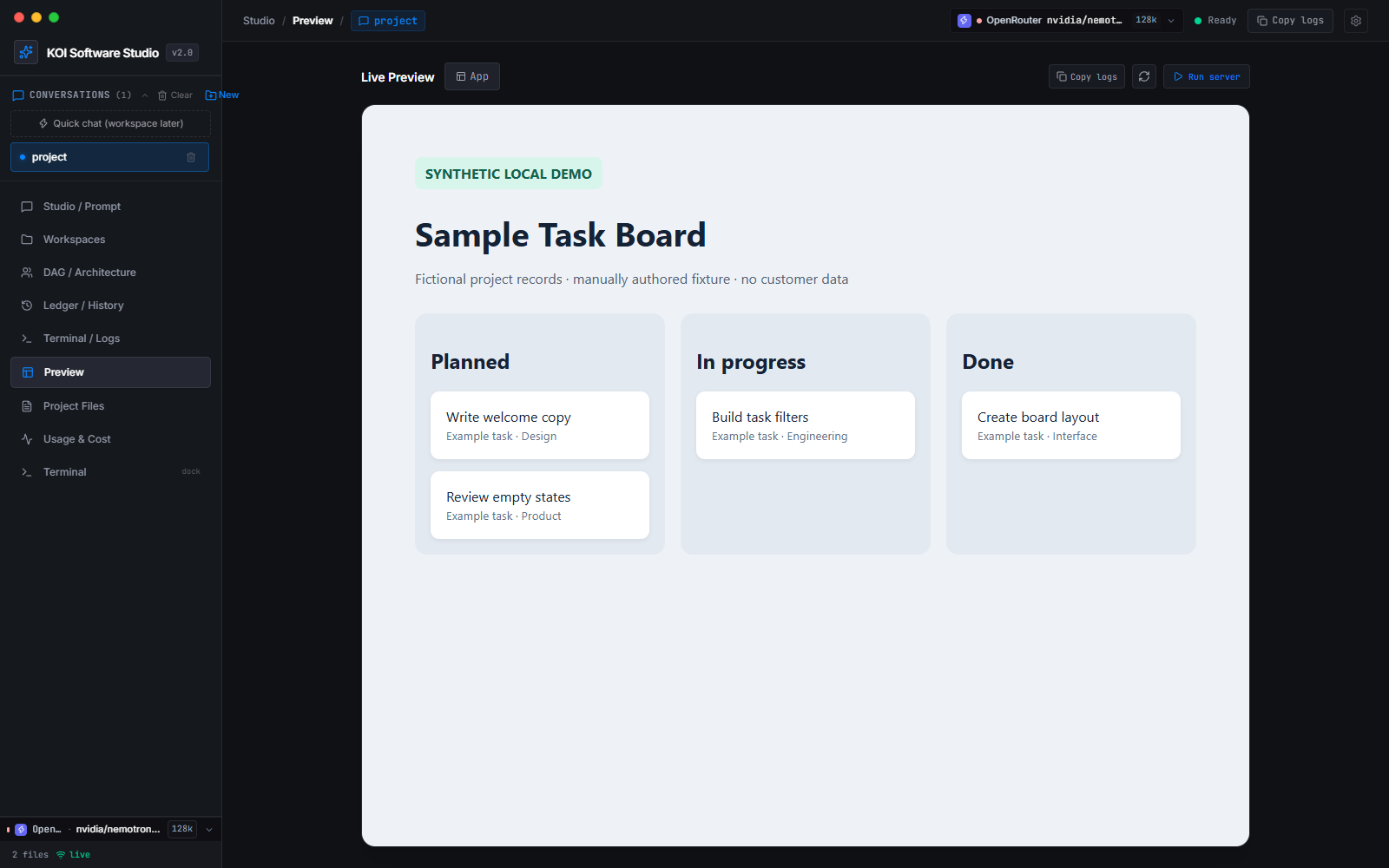
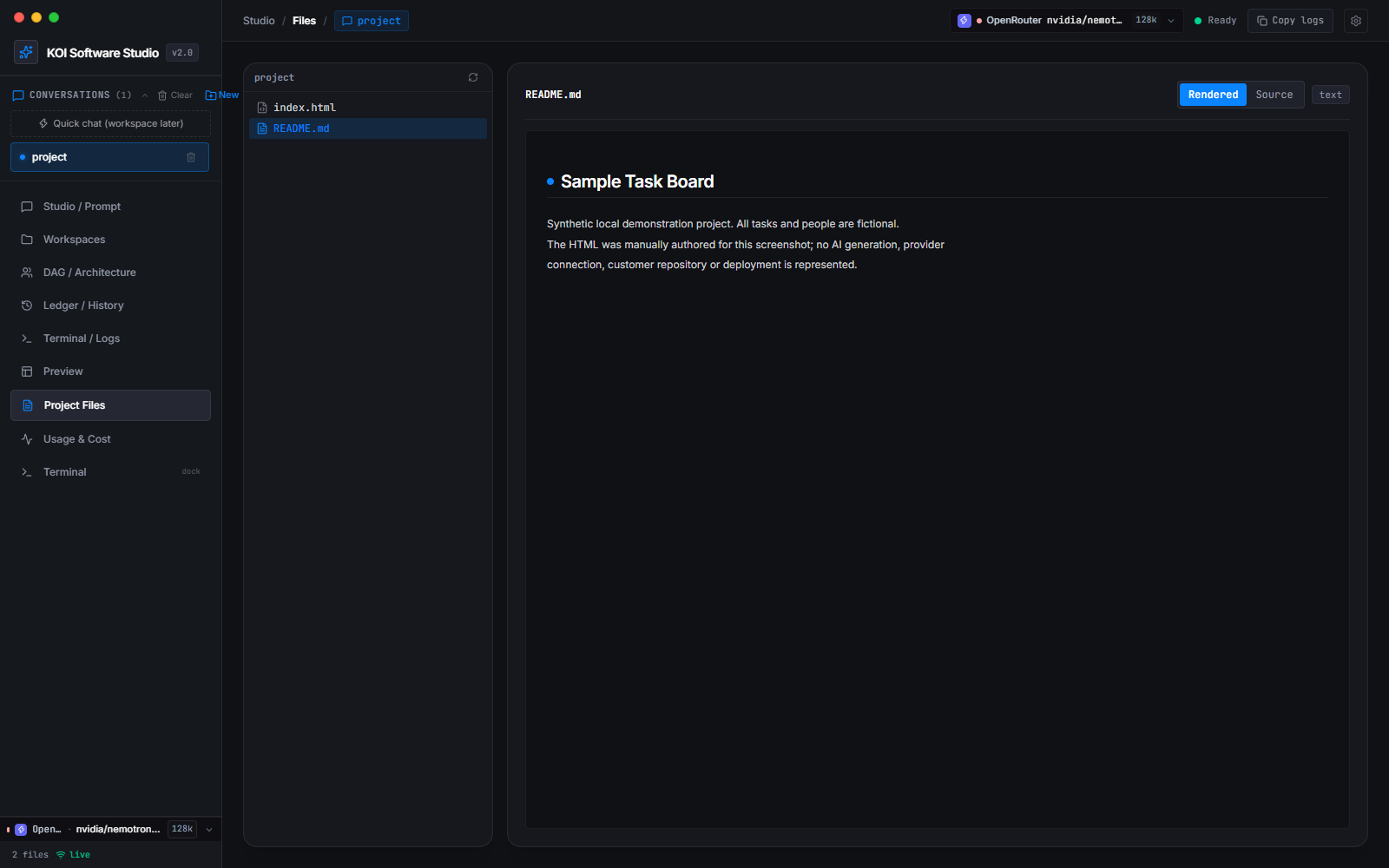
The local daemon and UI opened a fictional workspace, rendered a manually authored HTML task board and displayed its README in Project Files. The repaired New Scratch flow was exercised. The preview is evidence of workspace and preview behavior; it was not generated by an AI provider.
Bugs and lessons
Repairs addressed misleading port errors, entrypoint handling, compiled React previews, resume behavior and Windows diagnostics. These are the seams where orchestration meets a real host: useful feedback must reflect the tool that actually failed, and resume must preserve the correct stage.
Proof and limits
368 tests, typing and production build passed. Live provider convergence and deployment were not evaluated. The workspace can execute host commands; it does not provide an operating-system isolation guarantee. Private source and customer code are not published here.