Implementation case study
Commerce: a reviewable creative handoff
A product offer and a creative package need a shared identity before an operator can assess whether they belong together. This case shows that implemented file handoff, without implying an autonomous business.
Implemented relationship
- Keep Handy: authoritative offer document, commerce and operator controls.
- Local Creator Studio: reads offer bytes and computes their SHA-256 identity.
- Package: copies a supplied video, writes caption, link and upload instructions; hashes packaged assets.
- Draft manifest: records offer identity, asset identity, review gates and empty publication/outcome fields.
- Keep Handy intake: reads the packaged manifests into its operator upload view and checks offer identity, assets and review state.
Inspect the handoff
This sanitized example preserves the implemented field names and value types. The identifiers and text are fictional; hash placeholders are deliberately not valid hashes. It is a schema illustration, not a generated production package.
Open the complete JSON example
{
  "id": "fictional-demo-post",
  "format": "video",
  "hook": "Fictional demonstration",
  "hypothesis": "Unmeasured demonstration hypothesis",
  "sku": "DEMO-SKU",
  "offerSha256": "<SHA-256 of authoritative offer bytes>",
  "status": "draft",
  "assets": [
    {
      "file": "video.mp4",
      "sha256": "<SHA-256 of supplied asset bytes>"
    }
  ],
  "checks": {
    "rightsCleared": false,
    "visualReviewPassed": false,
    "offerCurrent": true,
    "disclosuresReady": false
  },
  "rightsEvidence": "Unverified supplied video; human review required.",
  "source": "<persona reference>",
  "sourceSha256": null,
  "aiGenerated": true,
  "aiDisclosureInCaption": true,
  "publishedUrl": null,
  "publishedAt": null,
  "metrics": {
    "views": null,
    "storeSessions": null,
    "paidOrders": null,
    "netContribution": null
  }
}
Two directions, one local file handoff
Keep Handy’s offer document is an input read by Local Creator Studio; no automated offer-export service is implied. The packaging script writes draft files into the selected Keep Handy workspace. Keep Handy then reads those manifests for operator review. This is a local file interface, not an event bus, autonomous publishing service or production deployment.
Decision: identity before publication
A byte hash ties a draft to a particular offer version and exposes changes. It does not establish that the offer is correct, rights are cleared or a video is suitable. The manifest starts as draft with rights, visual and disclosure gates false, and publication and revenue fields empty. Human review remains part of the workflow.
Separate tools, separate boundaries
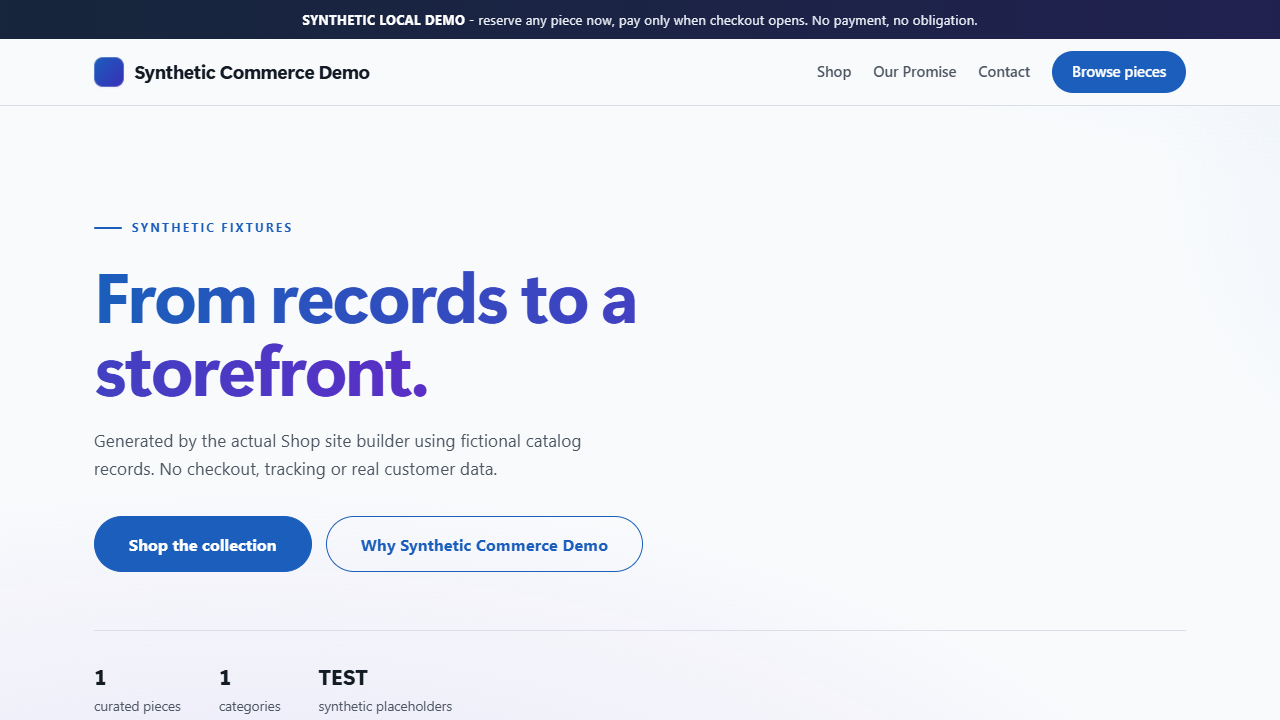
Shop prepares supplier/catalog/image/storefront assets; the pictured output uses fictional records. Content Relay prepares transcript-to-social drafts with a synthetic provider. Neither is verified as integrated into this handoff. KOI is a separate engineering workspace; FinOps is a separate reporting product.
Walkthrough and lessons
The bounded evidence covers offer identity and package/manifest preparation, plus local commerce/operator fixtures. Keep Handy passed 423 local tests; Linux gates retained 13 existing optional/browser skips. Path containment and explicit review states matter because a convenient packaging script must not imply approval. GPU generation, model/media rights, live supplier quality, checkout, fulfillment and business outcomes remain untested.